
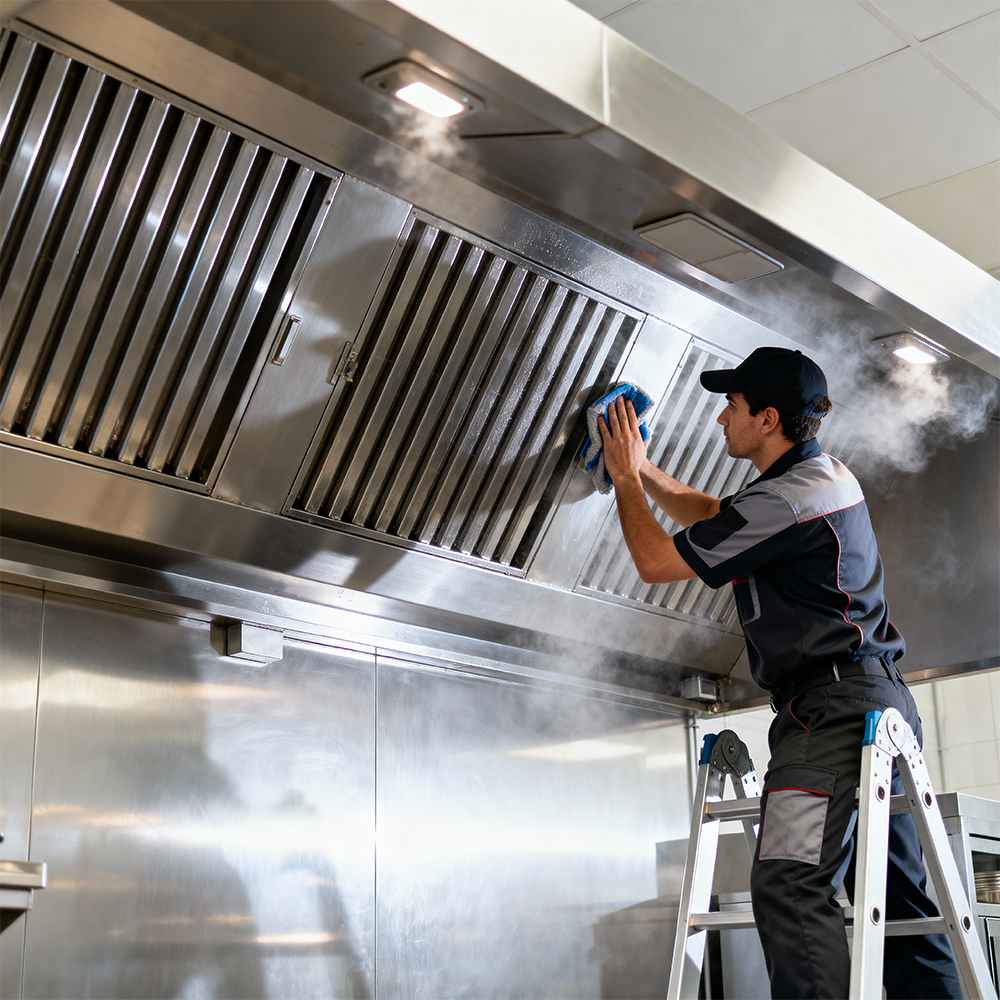
A dirty exhaust hood isn’t just ugly—it’s a fire hazard and a health inspection magnet.
Your exhaust hood pulls smoke, grease vapors, and heat away from the line. Over time, that grease collects in the filters and ductwork. If it’s not cleaned on a regular schedule, you’re risking flare-ups, smoke issues, and even insurance problems.
How often should you clean it?
It depends on your volume and menu:
- Heavy volume / high grease (burgers, fried chicken, wings):
Every 1–3 months - Moderate volume (mix of grill, sauté, oven):
Every 3–6 months - Low volume / light cooking (no fryers or grills):
Every 6–12 months
Your local fire code or insurance carrier may have their own requirements—ignoring those can cost you if there’s ever an incident.
Signs your hood needs attention
- Visible grease buildup on filters or canopy
- Strong lingering smoke or haze on the line
- Fans louder than usual or struggling to keep up
- A burnt, greasy smell when the line is busy
If you’re noticing any of these, don’t wait for your scheduled service date—move it up.
Daily and weekly tasks for your team
Your staff can help extend the life of your hood system:
- Wipe down the hood interior and exterior at the end of each shift
- Check that filters are seated correctly after cleaning
- Make sure fan switches and lights are working
- Report unusual noises or vibration from the fan immediately
Why professional hood cleaning still matters
Deep cleaning the ductwork, fan, and all hidden areas requires specialized tools, chemicals, and training. A certified hood cleaning company will:
- Clean the full system—not just what you can see
- Provide documentation you can show fire inspectors and insurance
- Catch small issues (like fan belt wear or broken hinges) before they become big ones
A consistent hood cleaning schedule keeps your kitchen safer, cooler, and more compliant—and saves you from expensive surprises.