
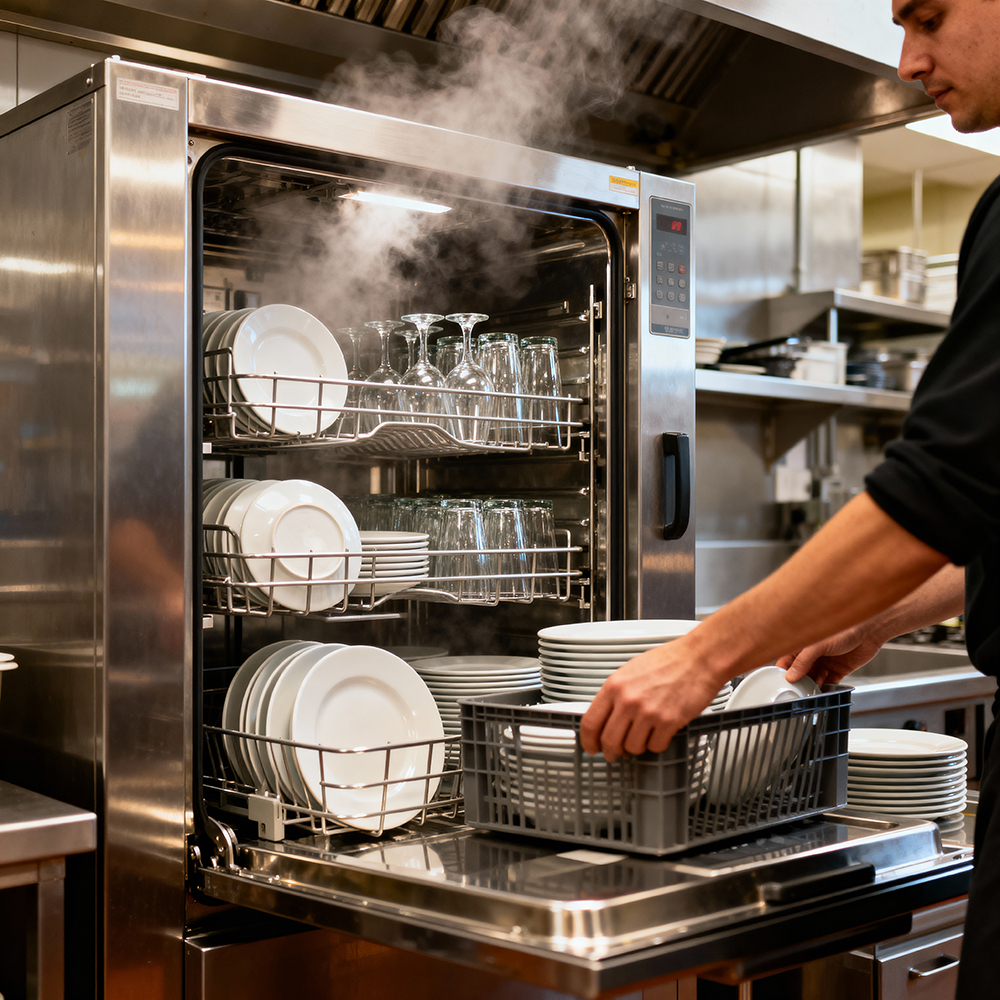
Your commercial dishwasher is one of the hardest-working pieces of equipment in your restaurant. When it’s not performing, you get cloudy glassware, greasy plates, and unhappy guests.
A little routine maintenance goes a long way.
Daily maintenance tasks
Train your team to handle these at the end of each shift:
- Scrape, don’t rinse: Remove food scraps before loading to keep filters clear.
- Clean the scrap tray and filters: Rinse out debris so it doesn’t recirculate.
- Inspect spray arms: Remove and rinse if jets are clogged.
- Drain and wipe down the tank: Standing water breeds slime and odor.
- Check chemical levels: Verify detergent, rinse aid, and sanitizer are topped off.
Weekly maintenance tasks
Once a week, add these steps:
- Run a descale cycle if you have hard water (or follow your chemical supplier’s schedule).
- Check the door gaskets for tears or gaps.
- Inspect racks for broken welds or plastic coating peeling away.
Temperature and sanitation checks
Clean dishes aren’t just about appearance—they’re a food-safety requirement.
- Verify the machine reaches the correct temperatures:
- High-temp machines should hit the manufacturer’s specified final rinse temp.
- Low-temp machines must have proper sanitizer concentration.
- Log these readings daily to stay ready for health inspections.
When to call a professional
Bring in a service provider if you notice:
- Dishes coming out consistently dirty after proper loading
- Water not heating or taking too long to heat
- Leaks around the base or door
- Breakers tripping when the machine runs
A quick service visit often costs less than the labor, rewash time, and guest complaints that come from chronic dishwasher problems.