
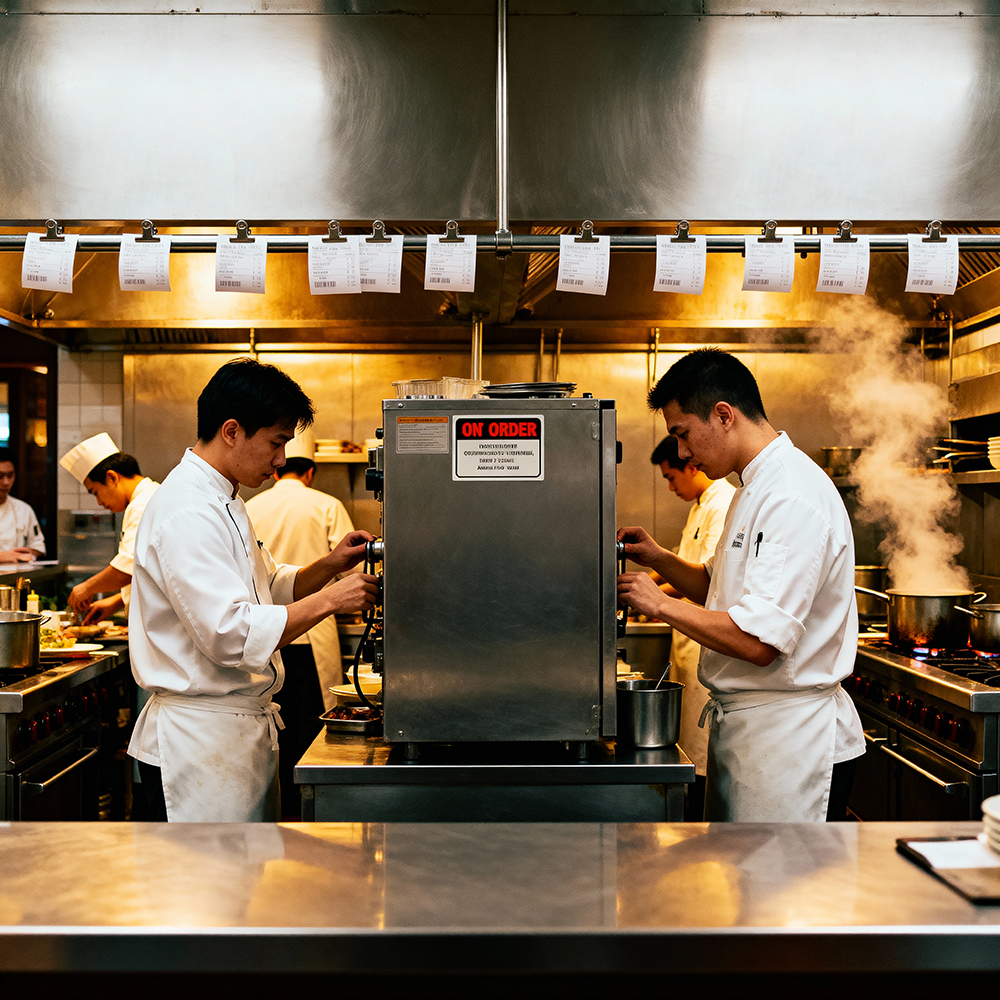
Even with great maintenance, equipment sometimes fails at the worst possible moment—right in the middle of service.
A little planning keeps it from turning into a disaster.
Step 1: Stay calm and assess
- Is it a power issue (breaker, plug, outlet) or the equipment itself?
- Can it be safely reset without tools?
- If there’s any burning smell, arcing, or gas odor—shut it down and do not attempt to restart.
Step 2: Switch to Plan B menu
Before you need it, build a backup menu:
- Highlight items that don’t rely on that piece of equipment.
- Train staff on what to 86 and what to push instead.
- Keep a small list posted in the kitchen or POS for quick reference.
Step 3: Communicate quickly
- Let servers know what’s 86’d so they stop selling it.
- If the delay is major, empower them to reset guest expectations and offer alternatives.
Step 4: Call your service provider
A strong service partner should:
- Offer clear response time expectations
- Help you troubleshoot basic checks over the phone
- Prioritize restaurants in active service whenever possible
Keep equipment details handy: model and serial numbers, error codes, and a quick description of what happened.
Step 5: Document the failure
After the rush:
- Note the time, symptoms, and impact (lost sales, food waste, overtime).
- Add it to your equipment log and review whether different maintenance, training, or procedures could have reduced the risk.
You can’t avoid every breakdown, but you can control how prepared your team is when it happens.