
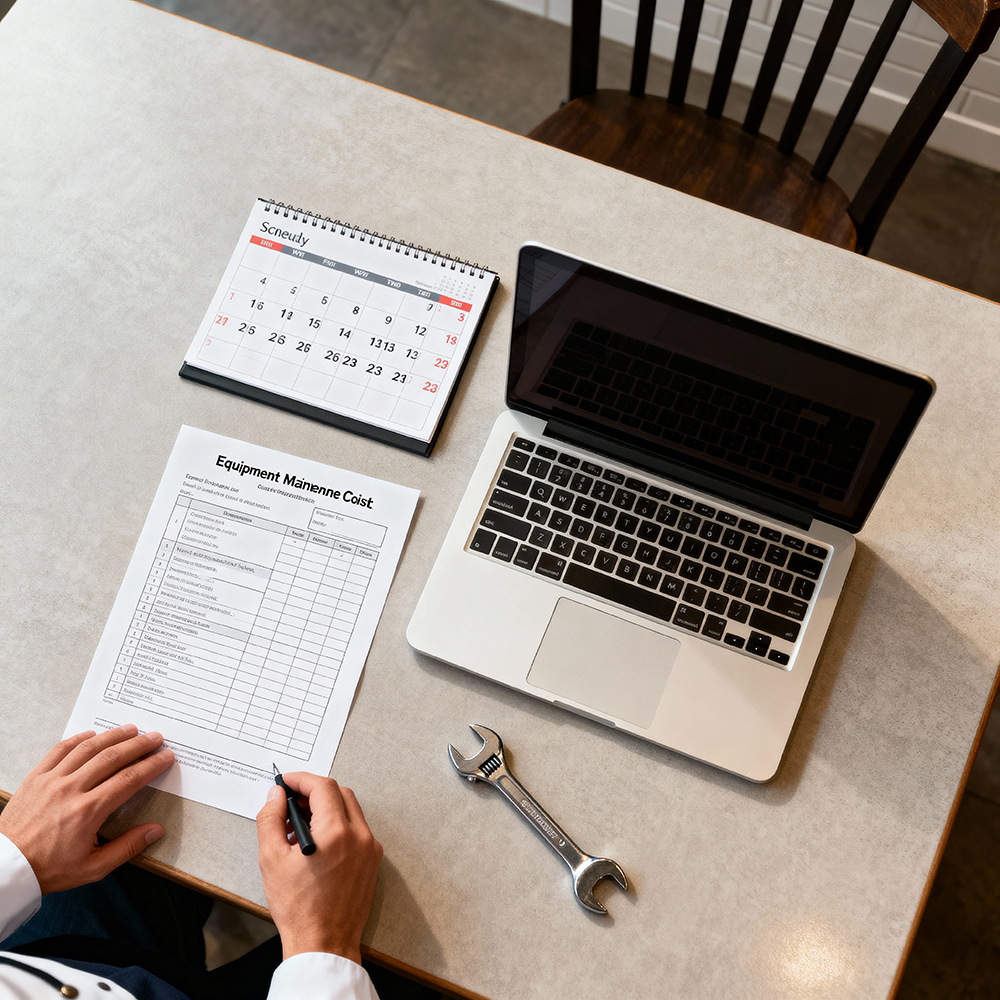
“Call when it breaks” is the most expensive way to run a kitchen.
A preventive maintenance (PM) plan gives you structure: set visits, known costs, and fewer surprises.
What a good PM plan includes
- Inventory of equipment
- Make, model, serial number, age, and location.
- Service schedule
- Quarterly, biannual, or annual visits based on equipment type and usage.
- Defined task list for each visit, such as:
- Cleaning coils and filters
- Checking gas and electrical connections
- Verifying temperatures and calibration
- Inspecting belts, motors, and moving parts
- Service reporting
- Notes on what was done
- Items that need monitoring
- Recommendations with timelines
Benefits you’ll notice
- Fewer emergency calls (and less overtime labor rearranging schedules).
- Longer equipment life and better resale value.
- More predictable budgeting for repairs and replacements.
- Better documentation for health inspectors, landlords, and insurance.
Getting started
If you don’t have a PM plan today:
- Make a simple equipment list in a spreadsheet.
- Decide how often each piece should be serviced.
- Partner with a service company that can build a structured plan around that list.
Strong restaurants treat maintenance like a core part of operations—not an afterthought when something breaks.